Owl Bookshop

IMG_1842Owl Bookshop, 207-209 Kentish Town Road, London, NW5 2JU

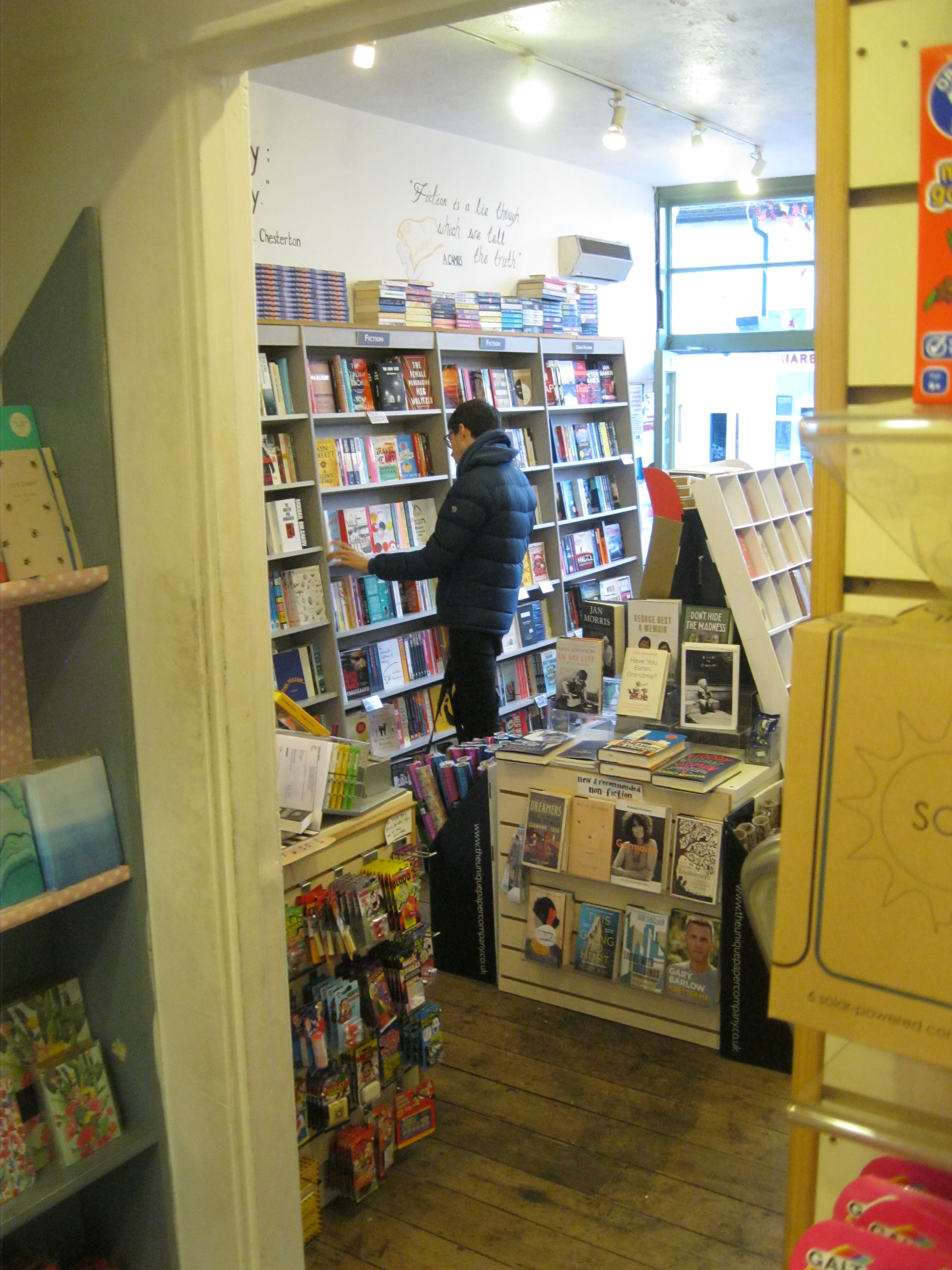
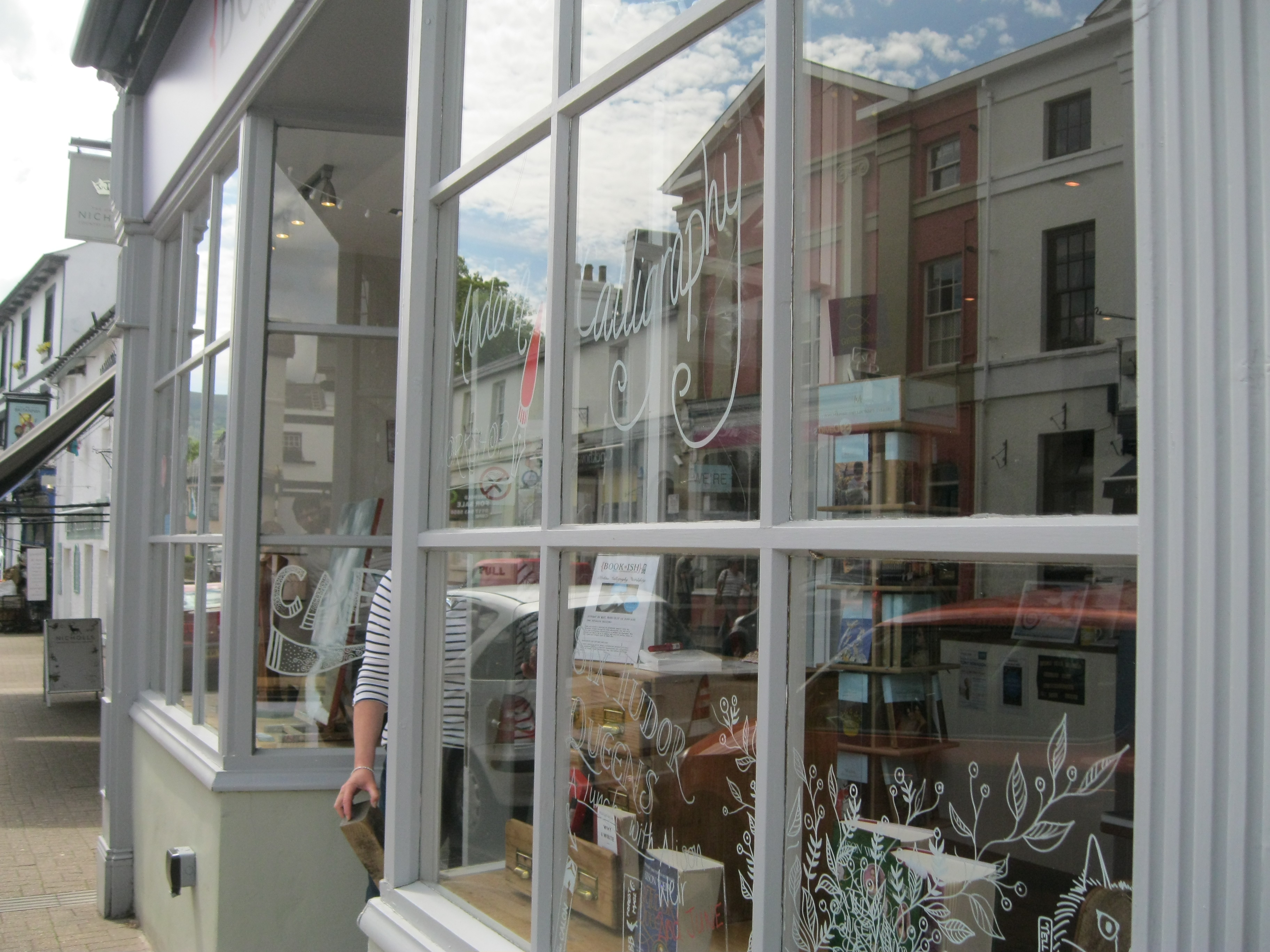
Last week I got myself very lost in Kentish Town, looking for Walden Books.  Fortunately, most good stories get started when the heroine stumbles off the path. As I wandered up Kentish Town Road, growing more and more certain that I had gone too far, I became aware of golden light glowing out from the windows of this beautiful green shopfront.

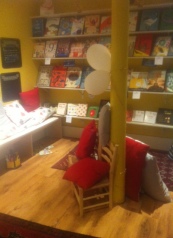
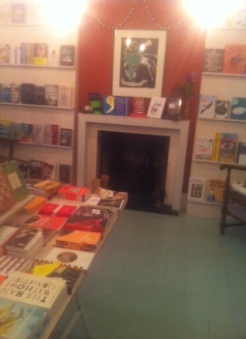
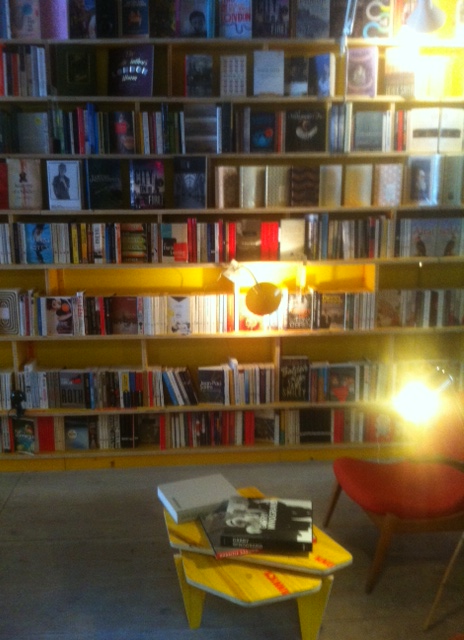
IMG_1839The first thing I noticed about the Owl Bookshop is how ‘local’ it is; sitting on the high street, it is an integral part of the community.  It’s the kind of place that probably has regulars.  It’s the kind of place where a child can grow up, returning every week like a ritual, just like I did in another local bookshop far far away.  The little chairs scattered around the shop invite you to sit down and read or sort out which books you’re actually going to take home.  The majority of the books are retail price, but there are a few tables throughout the shop filled with books on sale for £3, £4 and £5, so a lack of money needn’t stop you from browsing.

It reminded me a lot of the Stoke Newington Bookshop and not just because the layout of the shop similar – indeed you could almost substitute Stoke Newington’s blue shelves for the Owl’s green ones and have the same shop. But more importantly, both have an almost tangible sense of community, and the booksellers who foster those communities are friendly, lively, energetic and more than competent.

When I walked into Owl Bookshop, one of the booksellers was patiently helping a woman decide what to buy for her friend who ‘likes good novels.’  Unbelievably, this was the only criteria she was able to give the bookseller, but instead of being annoyed, he seemed to enjoy the challenge, happily bouncing around the shelves suggesting books.  She left with three so I think he must have done all right.  As I skulked around the poetry section eavesdropping on other customers (my usual routine) I heard them talk to customers with complete ease about authors I’ve never heard of, being helpful and obliging and more than willing to spend as long as it took to make sure each customer left with the perfect book.  I don’t normally ramble on about staff, but I’m making an exception because the good people at the Owl were truly impressive.

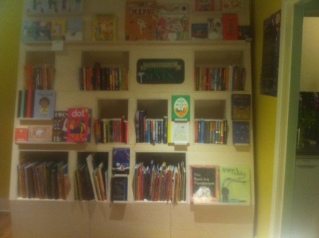
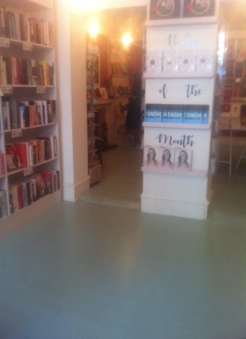
As they chattered away with customers, I was busily exploring the fiction section.  In addition to a wall full of A-Z Fiction, there was a bay of bestsellers and new releases.  I always love this in a bookshop; I think it’s a sign that the IMG_1841people who run it love, care about and pay attention to books.  I was even more impressed to realise that these bays contained so much more than the mundane chart-toppers.  It gets old to see the same books on display week after week in every bookshop, so it’s very refreshing to see a display of books that demonstrates a real knowledge of the publishing industry, as well as an understanding of what’s good, not just what’s popular.  Not that those can’t be the same thing, it’s just that…well, come on. In a post-50 shades world, do I really need to qualify that statement?

Even the Classics section was better than average, redefining what we deem ‘classics’ by including books from all over the world.  Some of these may not be canonical in the world of British academia, but they have stood the test of time nonetheless and gave me lots of new ideas for my ever-growing ‘To Be Read’ pile.

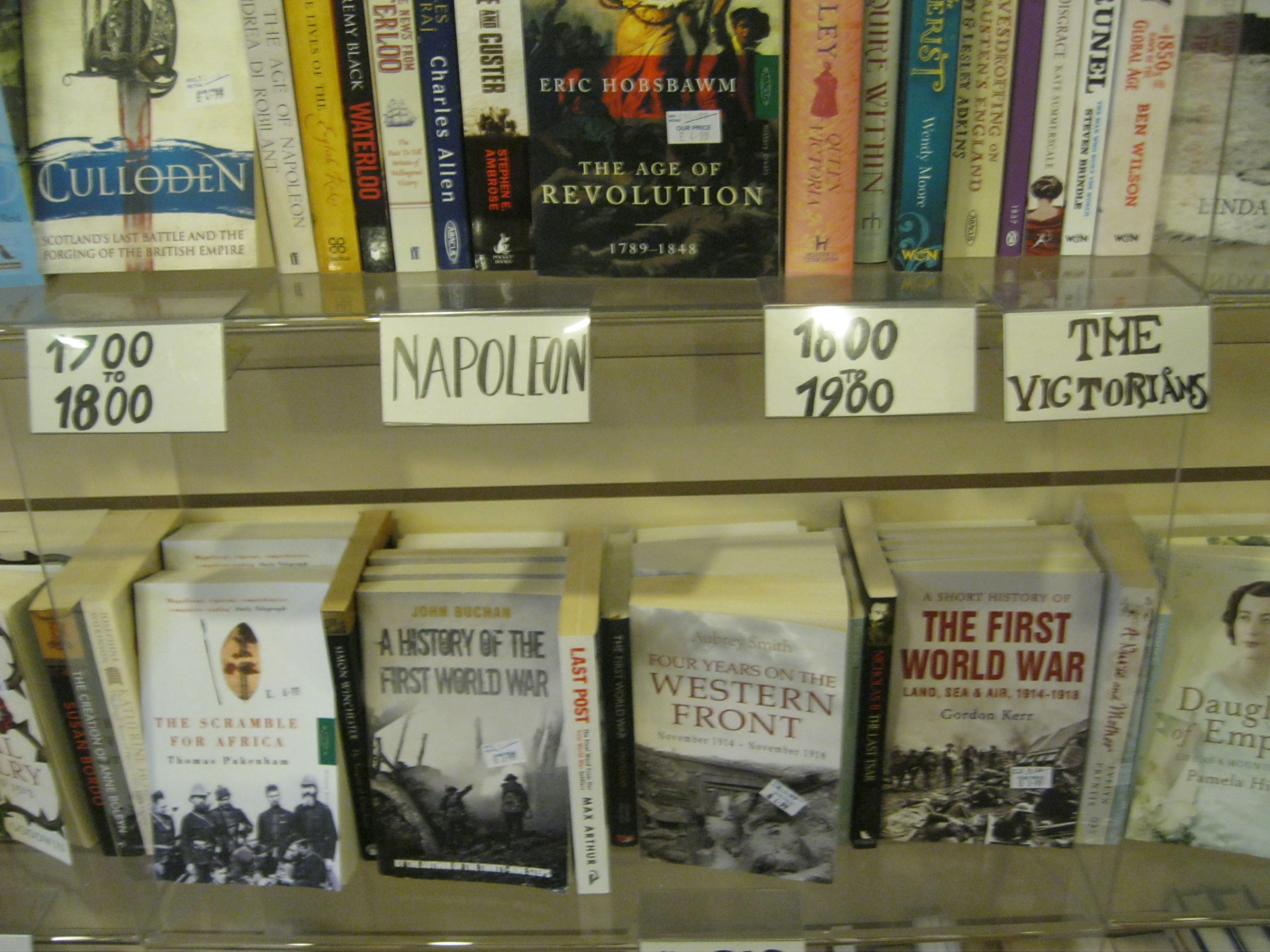
The rest of the bookshop is really brilliant; I truly can’t say enough good things IMG_1840about it.  And I’m stumped for clever ways of phrasing my praising.  I’m just in love with the Owl, okay?  A whole wall is full of travel books. The history and politics sections are relevant and well-stocked.  The corner full of cookbooks is colourful and appealing.  Beautiful art and architecture books have an entire section to themselves.  I could have spent hours there looking through the interesting selection of interesting books I never knew I wanted to read until I saw them and then could not pull myself away.

The only small stain on my otherwise brilliant visit fame from another customer.  He walked in with his sons and before he even looked around went immediately to the desk.  He told one of the aforementioned brilliant booksellers that he was taking his son to a girl’s fourth birthday party.  ‘I know nothing about girls and girly stuff’ he snapped, making every woman in the shop glad not to be the mother of his spawn.  Each time one of his boys suggested something like Thomas the Tank Engine or a Scooby Doo book, he snarled ‘We’re not looking for a book you like, we’re looking for something a girl would like.’  I think he spent the entire time trying (and failing) to avoid sneering every time he said the world ‘girl.’    I stood there fuming as he indoctrinated his impressionable sons with some idiotic ideology about how girls like princesses and boys like trains, dinosaurs are for boys, sparkles are for girls.  I wanted to explain to him that if he continued with his behaviour he would be guilty of unleashing two first class neanderthals upon a world that thought it was rid of this type of person.

This ridiculous dividing of literature into categories happens in academia too, IMG_1837where Jane Austen and Emily Bronte are studied by women but their male contemporaries, like, say, Dickens and Carlyle, are for the boys.  Don’t people realise that Austen could be just as observant as (and even more bitingly clever than) Dickens?  It’s worrying that we still allow artists to be pigeon-holed in any way, but gender-based judgements are the worst.  The power of literature is that it allows us to transcend silly little differences like gender, class, nationality, race and see ourselves as human beings.  Anyone who tries to pervert that noblest of goals is, in my humble opinion, a mere subspecies.

But what bothered me most was that he completely missed the point of this bookshop.  By offering its readers an unconventional selection of titles, which are good regardless of whether they’re popular or well-known, the Owl asks us to go beyond our normal habits and discover something new.  IMG_1838It asks us to try out books we would never have found ourselves, by authors we’d never heard of but probably should have.  It invites us to open our minds and it reminds us that this openness, this ability to see beyond our own tiny little lives and experience the world in a new way, is the reason we loved reading to begin with.  So here’s to the Owl Bookshop; the world needs more places like it.

Walden Books

IMG_1850Walden Books, 38 Harmood Street, London, NW1 8DP

Covered in beautiful purple flowers and the overspill of vines from the house next door, Walden Books is an inconspicuous fairy tale cottage hiding on a quiet residential street in Chalk Farm, a refuge just moments away from the noise and confusion of Camden Lock Market.

Outside, inexpensive fiction and poetry books draw wanderers in for a quick IMG_1844browse through the books outside on the terrace. The brave or curious venture further, into the bookshop itself.  The little brass bell that announces the entrance of a customer probably only rings a dozen times a day, so the shop attendant will notice you.  He’s a lovely, friendly man who waved me through to the back room without having to surrender my bag. I’m shocked but delighted to learn that I don’t look like the kind of person who’s going to steal books.  Luckily, I got the chance to browse through the small, cramped shop privately, with only one other customer arriving as I was on my way out.

IMG_1849

The front room has antiquarian books and a whole bay full of secondhand books about London, ranging from the recent to the antiquarian and covering different IMG_1847areas of the city.  Sneaking past the till, I squeezed into the small back room.  For the limited amount of space, Walden Books has an impressive selection of secondhand books.  Books are everywhere, organised horizontally, vertically and diagonally.  For the most part they are actually in vague alphabetical order (miraculously), but there are some who spill off the shelves and huddle on the floor at their feet.  The large column in the middle (covered by books) makes the room feel more cramped, but provides a little bit of privacy so that browsers can hide in corners surrounded by the smell of paper and imagine that they’re completely alone.  In these quiet corners, the browser will find fiction and poetry as well as a huge selection of plays.  Normally, when you ask to be directed to the drama section, you encounter one shelf.  Fifty percent of it is occupied by William Shakespeare.  He’s absolutely brilliant, of course, and deserves his spot in all of our hearts and on all of our shelves, but has drama not progressed at all in the last 400 years?  Answer me, Waterstones!!  The other half will be filled with various copies of A Streetcar Named Desire, Doctor Faustus, Death of a Salesman and, if you’re lucky, an Ibsen or two.  It’s all very limiting and predictable.  But at Walden Books, the plays – dug up from some very interesting people’s attics, I have no doubt – represent a huge range of time periods, cultures and genres.  Even if you don’t buy anything, it’s worth going  and browsing around just to get some new ideas in your head.  I have a little red notebook that I carry around with me whenever I go into bookshops to write down the names of books and authors I discover.  The list is so long now that I’ll probably never get through them all, but for some reason writing them down makes me feel one step closer to having read them.

A whole wall of the middle column is dedicated to poetry.  Again, it’s refreshing IMG_1846to see variety rather than the one typical one bay dominated by Keats, Shelley, T.S. Eliot and Carol Ann Duffy.  Again, all are brilliant, but there’s so much more out there!  My favourite discovery in Walden’s today was a copy of Ezra Pound’s Selected Poems.  It felt slightly serendipitous since just the other day I almost got sucked into buying a book of Pound’s translations of Chinese poetry for £4 at the Southbank Book Market.  The best thing about it was that someone had tucked a clipping from the Times in April 1970 into the front of the book.  The clipping contained a poem by Pound which I think was called ‘The Pigeons’ which I have mysteriously not been able to find mention of anywhere else.  Is anyone able to illuminate? Whenever see something stuck in a secondhand book, I can’t help but wonder what the thought process of the bookseller is when s/he finds it.  Does it cross his/her mind to throw it in the bin, as the refuse of an older reader, of does it get to stay in because it adds to the value of the book?  I sincerely hope it’s the latter.

IMG_1848

Apologies for blurriness. And my generally terrible photography.

Other areas covered on the shelves of Walden Books are local history, philosophy (and it’s a fantastic selection by the way), fiction, natural history, sociology and anthropology.  I came very close to buying and 1959 edition of Frazer’s The Golden Bough, the anthropological study of mythology and religions upon which T.S. Eliot based many parts of The Waste Land.  For those who aren’t familiar with my obsession with Eliot, suffice it to say that I think of my life in terms of ‘before I read The Waste Land‘ and after.  The book was only £5 and had a lovely inscription on the inside front cover – ‘To Kate, on your 17th birthday.’

Despite the clutter, the confusion, the awkwardness of being one of two strangers in a very small space and the unorthodox collection of books, there is something beautiful about Walden Books.  It’s messy, scattered, dusty and dingy.  It’s madness, yet there is method in’t.  It is full of a chaotic promise, that if you have the patience to sit and look, turn pages and inspect overleaves, you too can be part of something magical.  It doesn’t have the sanitary neatness of a chain bookshop or – worse – of your Kindle’s ‘library’ if we must use the word, but it has something infinitely better.  It reminds us of the simple beauty of a row of old books and the promises they make to anyone brave enough to pick them up.

Love Your Local Library

By this point, you all know that I like bookshops.

I like them because they are places where adventures start, conversations happen and lives are changed.  The only other place in the world that can have the same influence on the development of imagination and a love of reading in a child is a library.

Many of you have commented telling me the stories of how you became life-long bibliophiles.  For some, like me, the journey began in an independent bookshop in your area, but for many others, it was the local library which got you hooked.

With that in mind and because, coincidentally, it is National Library Week in America, I’d like to ask you to do me a solid.

A few years ago, Margaret Atwood did something great.  Okay, she probably did a lot of great things but one of my favourites was that she lent her support and star-power to a campaign to stop proposed cuts to the public library system in Toronto.  As someone who lived in Toronto for many years, I can tell you that its public library system is one of the best in the world; I often refer to it as ‘the one thing Canadians do better than the Brits.’  I cannot tell you how useful the Reference Library at Yonge and Bloor has been to me over the years or how many childhood hours I spent at the Deer Park branch buried in picture books.

I signed a petition a few years ago to help this campaign and got signed up to their mailing list.  Last night I got an email explaining that a new provincial leader has just come into office and is in the process of reviewing the budget, so this is the perfect time to petition the government for some of the funding for public libraries province-wide to be restored after years of successive cuts.

If you have fond memories of a public library where your love of reading was fostered as a child, if you still use one today for the odd research project or better still, if you frequently use your local library as your primary source for new books, please sign the petition to give back some of the funding to Ontario’s libraries.  It takes about a minute and you can opt out of future emails from them.

And while we’re at it, Happy National Library Week if you’re in America and for those of us in the UK and elsewhere, well, shall we just pretend?

Brick Lane Bookshop

IMG_1836Brick Lane Bookshop (formerly Eastside Bookshop), 166 Brick Lane, London, E1 6RU

Every Sunday morning, Brick Lane in East London comes to life as vendors sell falafel, bubble tea, vintage denim jackets, used typewriters with Arabic letters (no joke, I almost bought one for £15 one day) and everything in between.  The scene is full of the smells of world cuisine, music from boomboxes and voice boxes, the calls of vendors and kids in ripped up jeans sitting on the curb eating a curry.  It’s a lively place at the heart of East London’s vibrant and diverse community and attracts all kinds of different people, from hipster kids looking for their next self-indulgent profile picture to tourists and every kind of market enthusiast you can imagine.  It’s one of the quirkiest markets in London and has thus far resisted being gentrified and losing its character.   The same could be said of the beautiful independent bookshop that sits in the middle of it all.

IMG_1835

The front window of the shop invites readers to ‘Take a Walk on the East Side!’ and is filled with books about London, with a special focus on East London and the Spitalfields area.  This trend continues inside with an entire wall full of books about London and East London including Iain Sinclair’s Hackney, That Rose-Red Empire, Eddie Johnson’s The Two Puddings, about a pub in Stratford which I’ve heard is both hilarious and touching, and Spitalfields Life, the brilliant book based on the blog of the same name, documenting all the eccentricities of the area and its local stories.

IMG_1828The poetry and fiction sections are excellently-stocked; after a few minutes of browsing I realised this is one of those bookshops where I would not leave until I had inspected every single shelf.  In the fiction section I breezed past Calvino, Flaubert, Kafka and Tolstoy (I’ve really been wanting to read more books by European authors lately; English is great, but there’s a whole world out there!) and worked my way through to Z.   In the end I bought The Magic Toyshop by Angela Carter.  Okay, she’s English.  Sue me.  It was £7 and I was happy to spend the money for a book I can’t wait to start reading.

The selection is wide, varied and most importantly, good quality.  No drivel in sight.  The books on the shelves are full retail price, but on the ground in front of them are boxes filled with discounted books from £3.  And there are some interesting choices in there too!  In addition to the discounted books there is a wall full of Wordsworth Classics, which are always about £2.  IMG_1833They’re not the greatest editions in the world, but they make great literature accessible to absolutely everyone (they have a children’s selection too), so even if you can’t afford to do more than admire the rest of the books, you have no excuse not to at least support your local independent by buying something when you can do it so cheaply.  The Brick Lane Bookshop has struck the perfect balance in many ways, with beautiful books you don’t mind paying a bit extra to own, every kind of literary paraphernalia you can imagine, from mugs to notebooks to cards, and then the deals and cheaper editions for those who can’t always afford the good stuff but still want a fix. In other news, it’s possible that I use metaphors of drugs and addiction to talk about books a little bit too often.

Another thing I love about this bookshop is that it embraces the strangeness, the quirkiness and the niche interests of the community of which it is such a central part.  In addition to books about Spitalfields itself, it has books for all the weird and wonderful people who live there.  There is a ‘Cult Sci Fi’ section and though I hadn’t heard of a single book or author represented in it, each book looked better than the last. IMG_1832The cookery section reflects the international community of East London.  Comic books and graphic novels get a much larger selection than in most other independents or chains, which is brilliant.  As this art form becomes more and more mainstream and authors learn ways to make the most of it, we are going to have to start appreciating it as a serious and interesting genre.  Unfortunately, chains often have only a small selection of the same old books and most independents don’t bother at all.  There’s not anything wrong with that per se, but it’s nice to see an independent that’s fully jumping on board.

IMG_1830With a small red armchair in the front window and another one nestled in the back corner for those less sociable of browsers, the Brick Lane Bookshop creates the kind of ambiance that invites you to stay and browse for a while.  But it also invites you to go on an adventure – from your comfortable armchair, of course.  Its unusual selection offers the chance to find a new read you would never have known to look for otherwise, and gives you a chance to learn more of the stories that happened not so long ago in the streets and alleys you thought you already knew so well.  It is a place of discovery and adventure, where any path can present itself to you when you open the first page of one of their special books. And if you can’t decide what to read, the staff have helpfully recommended some of their favourites.  Little white IMG_1829notes pop up now and then between the books recommending a new discovery or an old stand-by.   One of these reads: ‘Jane Eyre by Charlotte Bronte – my granny’s favourite book and one of mine.  Made my stomach flip.’  I loved reading this because it’s a perfect example of what books and bookshops are really all about  – sharing our stories, passing them down, remembering, retelling and preserving them.  Whether that means misting up re-reading a classic you shared with a loved one or having a deeper experience of your neighbourhood when you know the names of the ghosts who roam its streets, books connect us to other books and other people.  So, really, any time you open a book, you enter an adventure.  And on that note,  let me finish with my favourite passage from Jane Eyre, about trying new things, going new places and having adventures:

“It is a very strange sensation to inexperienced youth to feel itself
quite alone in the world, cut adrift from every connection,
uncertain whether the port to which it is bound can be reached, and
prevented by many impediments from returning to that it has quitted.
The charm of adventure sweetens that sensation, the glow of pride
warms it…”

And on that note, go forth.  Read.  Take a walk on the east side.

IMG_1834

Heffers Booksellers

IMG_1811Heffers Booksellers, 20 Trinity Street, Cambridge, CB2 1TY

Heffers: The great Cambridge bookseller since 1876, reads the massive banner in the centre of what is essentially a city of books.  A bibliopolis? With its large size, wide selection and more commercial feel, this bookshop is a departure from the quaint, quiet independents I normally haunt in Cambridge, but it has its benefits.  So bear with me.  They can’t all be quirky and cute.

Heffers has been providing Cambridge with the literature its students and IMG_1810residents no doubt gobble up for 137 years and has only recently been bought by Blackwell’s.  Unfortunately this means that the place has lost a bit of its individuality and come to look a bit more like your average Blackwell’s or Waterstone’s.  But that’s okay. As a literature student I can testify that sometimes creaky floors and yellowed pages just don’t give the selection you need.  And that’s okay too.  Both types of bookshops have their benefits and I thoroughly believe that we need both.

We need places to explore, to wander, to seek and occasionally (though it’s not the most important part) to actually find.  Ideally, we’d live in a world where we have enough variety that you can pick and choose, supporting the best local independent for the cause, moving around freely when what you need out of your bookshop is slightly different.   Making new friends, but keeping the old, as they say.  Why the internet age is so vehemently opposed to giving us choice is a IMG_1809mystery to me, except to suggest (conspiratorially) that maybe they like dictating what we can and can’t find.  I know that that sounds insane, but think about it.  Shouldn’t we be insulted that our intelligence is made so little of that big companies have the audacity to recommend books we may like, to limit our choices to one maketplace, to monopolise our book-buying, book-reading, book-reviewing and book-sharing experiences by eliminating all the competition?

Cambridge, on the other hand, is a city that seems to have it right.  Its narrow cobbled streets house every point on the spectrum, from Waterstone’s at one end, The Angel Bookshop somewhere in the middle and The Haunted Bookshop at the extreme other end.   Heffers is just another point on the spectrum; a place you can feel good about patronising because it’s a bricks and mortar bookshop and still technically an independent, but which has all the convenience of the big chains.

But that’s not to say it hasn’t retained some of its own individuality.  It is a far IMG_1814more specialised bookshop and has a fantastic range of academic books, for which I have no doubt the students at Cambridge are very grateful.  It goes beyond just English students though and has music, art, history, politics and economics sections that stock more than the bestsellers and offer choice, variety and a high quality selection.  It also has an entire section filled with prints, ranging from classic pieces of art to posters of Che Guevara to decorate any pretentious first year student’s walls.  Furthermore, unlike a chain, it also has a small secondhand books section in the basement, providing even more options for skint students and tightly-budgeted families.

The layout of the books is also infinitely more appealing than an ordinary chain bookshop.  These little windows cut into the middle of shelves not only add a bit IMG_1812of fun and playfulness to the shop, but encourage all those trite but nonetheless accurate sentiments about books being windows on the world.  The size of the shop, its selection and its quiet, serious atmosphere make it perfect for Cambridge.  It caters to frazzled undergraduates who desperately need a certain book, as niche or obscure as it may be, while still providing a relaxed environment where any resident or visiting bibliophile could quite happily spend the whole day.

I think it’s appropriate to end this fun little Cambridge mini-series with Heffers.  One of my favourite things about the city of Cambridge is that it’s full not only of books, stories and poetry, but of a range of brilliant independent bookshops.  It is a place that gives back something we’ve been missing these past couple of years: choice.

IMG_1813Because why should a giant company or an impersonal website decide what we read?  Surely books should be the way we express not our conformity, but our originality, or individuality.  Surely they should be the way we show not our laziness, but our adventurous side, our free and independent minds, our unique imaginations and our personalities.  In Cambridge, book lovers have it made.  They can have an adventure amongst yellowed, tea-stained, dog-eared pages and creaky attic stairs, or they can get in and out with the book they’ve been needing.  Heffers may not be my favourite bookshop in the world, but I’m glad it’s there, proving that we actually don’t need worldwide monopolies dictating everything in order to still have convenience and ease.  It shows that we don’t need to bow to the big fish to get the obscure titles or out-of-print classics we love.  All we really need are a couple of dedicated booksellers.

The Haunted Bookshop (Sarah Key Books)

IMG_1827Sarah Key Books The Haunted Bookshop, 9 St Edward’s Passage, Cambridge, CB2 3PJ

It’s official.  I’ve found the strangest bookshop in the UK.  Congratulations to me.

Cambridge’s Haunted Bookshop is one of the few bookshops in the world that is truly unique  – the only one of its kind – and I love it. I’m massively intimidated by it, but I completely love it.  While the Waterstone’s in Cambridge has a great selection and a plethora of inspiring titles, it still looks exactly like my local Waterstone’s in Islington.  And the one in Trafalgar  Square.  And the one at Gower Street.  Even Cambridge’s own independent bookseller, Heffer’s (review forthcoming), looks exactly like every other branch of Blackwell’s, the major chain that now owns it.

There are a lot of up-sides to this gentrification of everyday life; it makes us comfortable enough to go into a bookshop anywhere in the world (or at least the country) because we know it can’t be all that different from the one at home.  And in this day and age, any method towards the end goal of getting people into a bookshop justifies the means.  But I think there’s also a lot that gets lost when the slightly different, thoroughly quirky and downright bizarre are edged out.  Haruki Murakami wrote that ‘if you only read the books that everyone else is reading, you can only think what everyone else is thinking.’  Surely he could just as easily have warned us that if you only get those books from Amazon’s Top Ten List or – worse – the Books section at Tesco (shudder) your bookshelf will look the same as everyone else’s.  And your stories will be the same, too.

That said, I would love to meet someone whose local go-to bookshop is this tiny, cramped little shop in St. Edward’s Passage.  What if this was the place you always went when you fancied a browse, if this the collection of books you had to work with whenever you needed a lit fix?  I’d imagine that the bizarre combinations your bookshelf held and the stories of hunting, finding, losing, sharing, wanting, coveting, considering and surrendering that those books told about you would fill many pages themselves.

But enough of my philosophising. There’s a bookshop to be fawned over.

First of all, it seems like the shop has two names.  Fine.  Why not?  As it turns out, Sarah Key Books (named, no doubt, after a woman called Sarah Key) specialised in secondhand and antiquarian books and particularly in children’s literature for years before it found its current home at what is called The Haunted Bookshop.  Unfortunately I do not have any answers as to how, why or by what it’s haunted.  I mean I could of course go all humanities student on you and say that it’s haunted by the voices IMG_1823and stories of writers and readers past.  Which, you know, I’m pretty much convinced it is.  But I’ve been waxing poetic about dog-eared pages a little too much of late, so I’ll refrain.  The other possible haunting is the palpable presence of the owner, sitting behind her desk, head popping up from between piles of books, who almost seems to wish that you’d leave her alone and let her get on with it.  It’s kind of a Bernard Black situation.  Although once you actually go talk to the staff I promise they’re much lovelier than Bernard Black.

The collection of secondhand and often first editions of classic children’s books is absorbing.  From Matilda to Harry Potter, from Enid Blyton to Hans Christian IMG_1825Andersen, from Alice Liddell to Snow White, every child and every childlike adult is covered.  Beautiful illustrated hardcover copies and tattered paperbacks range from £4 or £5 to roughly £1500, for something like, say, a first edition of Prince Caspian.  For those of us who will probably never have the kind of disposable income required to do more than pick up and maybe sniff these books (if you’re feeling cheeky) it’s like the trials of Tantalus.

Children’s books aren’t all that’s on offer though; the Folio Society editions make their appearance too, as do various editions of classics. I had my eye on a copy of one Sherlock Holmes novel or another, as well as a FS edition of Wuthering Heights.  I refrained from buying anything, to my dismay and my wallet’s satisfaction.

IMG_1826Despite not going home with any of these beautiful books, I still felt glad to have found this strange and wonderful little place today.  Like Alice falling into Wonderland, or Harry landing in Diagon Alley, walking into the Haunted Bookshop is like stepping through a portal.  It’s like being transported back to a time before global monopolies (yes, I’m cross with Amazon for buying Goodreads; I promised not to rant about it), super-chains and clinical, sanitised spaces where no one is ever challenged and nothing new ever happens.  It makes me glad to live in the UK because it seems to me that while so much of the world just steps in line and lets the strange and quirky and unpredictable fade out of their lives, some people here (few and far between as they may be) still put up a fight for their weirdness.  Sarah Key Books: you’re one of a kind and I hope you never stop fighting to stay that way.

G. David Bookseller

IMG_1816

G. David Bookseller, 16 St.Edward’s Passage, Cambridge, CB2 3PJ

St. Edward’s Passage is a narrow little side street that ducks away off King’s Parade in Cambridge.  It’s the kind of street that you could very easily not notice and pass by without ever realising that it was there.  G. David Booksellers (also referred to as David’s Bookshop) is, remarkably, even easier to miss, as it’s on a narrower bit of street which veers off to the left while the rest of the street carries on forward.  It’s almost as if the bookshop is hiding from the prying eyes of noisy tourists, setting itself apart for those who really want to find it.

Inside is a world where any book-buyer will find something to fall in love with.  IMG_1822To make sure of this, G. David stocks new, secondhand and antiquarian books.  The new books are usually slightly cheaper than retail price, and they fill up the history, fiction, classics (not classic literature, but classical literature – I love that they have an entire section just for that), Shakespeare (again, his own section), poetry and drama.  In amongst these new titles are secondhand books for very cheap prices.  In the children’s section there were £1 Wordsworth Editions copies of all the classic children’s tales and cheap secondhand copies of everything from Harry Potter to Narnia, all for around £2 or 3.

IMG_1817The selection is a bit quirky, as it usually is in secondhand bookshops.  Like any good secondhand shop, it’s not the place to go when you know what you want or need immediate results.  But it is the perfect place for browsing.  The new books are clever and well-chosen, so if you do wade through the unorthodoxy that always exists in any good used bookshop and actually buy something, you’re guaranteed to walk out with an actually good book.  The secondhand books reveal some interesting patterns – someone nearby has an obsession with PG Wodehouse and has provided dozens, if not hundreds, of his novels, which take up an entire wall.  There are also, as I mentioned, dozens of editions of Shakespeare’s plays and poetry and piles of secondary criticism about his works.

Downstairs, in the basement, are the sections that always seem to get relegated IMG_1820to the basement.  Isn’t it unfair that fiction is always front and centre, while gardening is always hiding somewhere in a back corner or a dingy cellar?  As someone who’s never bought a gardening book in her life, I have no right to complain, but I must say it gives me much more sympathy with the gardening, nature and pets books that always populate those silent, cobwebbed back corners.  Although if I were a book, I must say those quiet corners are probably where I would set up camp.

IMG_1818If the front rooms and the basement are the areas where browsers are likely to find something they want to flip through, buy, take home and treasure, then the back room is the place to go when you would actually like to be impractical and a little bit decadent, thank you very much.  For it is here that the antiquarian books live.  Modern first editions and early copies of classics line the walls with their leather bindings, gold leaf pages and their red and brown spines facing out to the world.  They are a sight to be seen.  Particularly worth looking at are the many books in the Local Interest shelf, which cover the history of the city of Cambridge, the university and local customs and traditions in Cambridgeshire.  A lot of them have fascinating photographs or illustrations of the city from years ago.

From obscenely beautiful books about mundane things like the UK’s flora and fauna to first editions of Ford Madox Ford and T.S. Eliot, there is something here for everyone to admire and try very hard not to literally drool over.  The best IMG_1819thing I found, though was a first edition of The Lion, the Witch and the Wardrobe by C.S. Lewis.  Aside from how incredible it is to hold a first edition of any famous book in your hands, this particular copy was absolutely unique because of what other readers from the past had left inside it.  In the front cover was a beautiful ex libris, which I think was issued by the owner’s primary school, which said that it had belonged to a little girl called Caroline and was given to her in 1950.  In addition to this little footprint there was a small yellow sticker on the inside cover referring to a book club operating in Nairobi.  How this book made it from a schoolgirl in England in the fifties to a reading group in Kenya is, I’m sure, a fascinating story which I would love to know, but am happy to imagine. I was sad to leave it behind, but maybe one day I’ll go back for it and add my own story to the – clearly long – list of stories in which this single book has played a part.

My parents, together, have read Narnia out loud 28 times. Seven books times four children, taking up years and years of bedtime stories and years of their lives.  The box set we have, though it’s not a first edition, is worth infinitely more to me because not only did I sit and invest hours of my life reading them, but I know that all of my brothers, with their tiny child hands, did the same and that 28 times my parents read them aloud, providing definitions of hard words, acquiescing to demands for one more chapter, and doing the squeaky mouse voice of Reepicheep.  Beautiful old books have always excited me; medieval manuscripts were my favourite part of every museum, just about beating the IMG_1821dinos for the top spot.  There’s a sense that holding them, you are experiencing some kind of communion with the first scribe who copied out the words in some French monastery all the way down to the little girl who wrote her name and the date inside the front cover.  But you don’t need to be holding the first edition of Ulysses (but oh my god, can you imagine?) for a book to bring you closer to someone else.  Any old book buried in a pile in a shop far away from home can call to mind our own experiences reading, reminding us of the people who’ve shared them with us, the questions they’ve made us ask and memories – private or shared – we’ve made between the pages.  Yes, I want the beautiful first edition, but I’d never trade it for my own tattered copy, infinitely more precious but probably worth only about a hundredth of the price.

The Angel Bookshop

IMG_1806The Angel Bookshop, 2 Bene’t Street, Cambridge CB2 3QN

The last time I was in Cambridge it was summer, the stone chapels and colleges stood out against a bright blue sky and my legs were bare.  I remember sitting out on the grass reading Julian Barnes’ The Sense of an Ending and being in a good mood despite my disappointment with the novel.

But this time around, I find myself scurrying from bookshop to coffee shop and back out again only when I’ve read a bit of poetry or had a bit of tea to steel me against the snow.  Yes, snow.  In March.  This time around, I’m sitting in Cafe Nero’s (don’t judge me, the independents here are all expensive) and reading Toni Morrison’s Sula.  The bleak weather of England and the hot American South of the novel make a surprisingly good combination.  And the tea doesn’t hurt.

When the weather in England does this to us, we let out a collective sigh of ‘Why the hell do people still live here?’ That said, days like this are as perfect for some activities as they are preventative for others.  I’ve heard this called ‘museum weather’ and ‘cinema weather’ and the general consensus seems to be that on days like this, staying somewhere warm and comfortable is the only thing to do.  Hence my pattern of bookshops and coffee shops.

Cambridge’s Angel Bookshop in a way seems to be at its best on days like this,IMG_1802 when the only thing anyone can think about is coming in from the cold.  When winters got cold in my childhood, the most wonderful feeling in the world was to come home, take off my boots and wet socks, be wrapped up in a blanket and read a story. In many ways, it still is.  Although nothing can compare to your mum’s hot chocolate and her storytelling (my own mum has the best troll/goblin voice in the world), walking off the road and into The Angel Bookshop comes pretty damn close.

Run by the same bookseller who owns The Lamb Bookshop back in Bloomsbury, The Angel shows evidence of the same careful selection of books, dedication to good quality children’s literature and incomprehensible ability to provide browsers with discount prices, undercutting Waterstone’s, if not Amazon.

IMG_1805A large portion of the ground floor is taken up by children’s books and the entire floor feels like it is, with colourful mobiles hanging from the roof and The Gruffalo staring at you from almost everywhere.  Already feeling nostalgic for the warm insides of my childhood, this bookshop reminded me of another one half a world away where my love affair with reading began in the mid-90s.  It was called Mable’s Fables and like The Angel Bookshop, it had a brilliant selection of children’s books arranged by age group.  If only Twilight hadn’t been present in the Angel’s 11+ section, it would have been perfection. But I guess even the best of bookshops are subject to the ridiculous whims of the market.

Also on the ground floor are some fiction books with a sign promising more downstairs and shelves filled with cookbooks, travel literature and a table of miscellaneous recommendations.  The most interesting one was called The Book of English Magic by Philip Carr-Gomm.  It is, sure enough, a book about the IMG_1803history of magic and the literature of magic in the British Isles.  I mean, come on, how cool is that?  I spied a chapter called ‘Star-cunning and Wyrd-craft: The World of the Anglo-Saxon Sorcerer’.  I am a massive geek about Old English and about Anglo-Saxon literature and one of my favourite OE words is wyrd which means something like fate or destiny – the modern English word ‘weird’ is descended from it.  My second favourite is wordhord, literally ‘word hoard’ which is basically the words that you store up and keep, waiting to be used, in your mind.  When Beowulf says he is opening his wordhord, he means he is unleashing his words; he is storytelling.  My completely unacademic theory is that wyrd and word sound similar because words and stories and poetry have the power to not only tell, but decide our own stories and our fates.  But enough of my geekery.

Downstairs is a basement full of bargains.  There are, of course, Wordsworth Classics for £2 each, but there are also contemporary fiction, biography and autobiography, literary theory, travel and history sections.  The majority of the books are massively discounted, most are half the retail price.  I bought a IMG_1804hardcover copy of the massive The Pale King, David Foster Wallace’s posthumous and unfinished 2011 novel.  It was discounted from £20 to £8 and more than worth having to carry the thing around with me for the rest of the day.  I think.  I was also delighted to discover a large hardcover book on the central table (which incidentally is absolutely covered in beautiful and interesting books – seriously, a treasure trove) which was a complete and full-colour facsimile of the 1660 Harmonica Macrocosmica by Andreas Cellarius. Guess what it is.  It’s a star atlas.  A star atlas.  How very romantic is that? The book was absolutely giant and cost £40 (though that was a discount too) so I didn’t buy it.  It is also the least practical purchase I could possibly imagine, but I still kind of regret the decision.

On my way back out of the basement (where I spent a very long time), I passed back through the children’s section again. As I lovingly admired books by my old friends Enid Blyton, Roald Dahl, Philip Pullman and Judy Blume, I relived that bittersweet moment from childhood when you realise that even if you read all day every day for the rest of your life, you’d still never get to the end of all the books.  Though the thought almost certainly depressed me the first time I had it years ago, when it has returned over the years I’ve been struck also by the positive side of it – you could read all day every day for the rest of your life, but you’d still never run out of books.

Henry Pordes Books

               IMG_1801Henry Pordes Books, 58-60 Charing Cross Road, London, WC2H 0BB

There was a time in my life when I went to this bookshop two or three times a week.  It made sense, really; it was on my way home.  Okay, it was one way home.  Okay, it was twenty minutes out of the way.  I called it the scenic route.

But Henry Pordes was worth the time I ‘wasted’ and the money I spent on it.  It IMG_1796was the first of the Charing Cross Road bookshops that I discovered when I first moved to London and so I think  I subconsciously compare every other shop I enter to this one.

Charing Cross Road is perhaps one of the most famous book-buying destinations in the world, thanks in large part to Helene Hanff’s brilliant novel about her post-war correspondance with Marks & Co., a bookshop that used to be at 84 Charing Cross Road.  If you haven’t read it, it’s a short epistolary novel that you can get through in a couple of hours and it’s definitely worth it.  I’d offer to lend you my IMG_1786copy, but tragically, I read the entire thing on a plane and then stupidly left it there.  But books never disappear.  No one, upon finding a stray book, would drop it in the bin; something about it wouldn’t let you.  You’d put it in a lost and found, or leave it behind somewhere where it would stay dry, or maybe donate it to a secondhand bookshop.  And if it were lucky, it would end up on Charing Cross Road.

Henry Pordes is busy at IMG_1800almost all times of day and its visitors include: 1. frazzled Arts & Humanities undergraduates, 2. awestruck American tourists, 3. antiquarian book dealers consulting on acquisitions or trying to sell their own books, 4. old men wearing tweed who head straight for the history section and 5. wanderers whose facial expressions indicate that they’ve never been here before and had no idea how good a decision they just made by walking in.

IMG_1799The shop’s front had been undergoing renovation for the past couple of weeks, but when I went yesterday its beautiful front window was once again visible from the street.  In this window are the books that trap you.  First editions of books of poetry, comics, art books, political commentaries, modern classics and not-so-modern classics are displayed proudly in the front window, and continue inside, covering the upper walls of the main room.  It doesn’t surprise me that the more valuable, antiquarian books are kept either high out of reach or behind glass.  I mean, it disappoints me of course, because just to touch them would be more than lowly English students dream of, but I get it.  Fortunately, they are still visible and give the shop an air of gravity; you feel that you’re in the presence of history, of genius and, essentially, of humanity’s greatest achievements.

IMG_1794On the ground floor, there is an entire corner whose three sides are covered with literary theory and literary biography.  I came here once while writing my dissertation on Ezra Pound and found, in this section, a book called Ezra Pound’s Chinese Friends. I thought it might end up being somehow relevant, and as it wasn’t very expensive I bought it.  It ended up being so useful that it became the central text in that dissertation.  It just goes to show that sometimes we humans don’t really know what we need, and if we were only ever to pursue the exact thing that we want, because we want it, right now, we would miss out on finding the things that we never knew we needed or, as a recent New Yorker article put it, ‘the book beside the book’ that you were looking for.  Also on this floor is a small room in the back full of history and political books, a shelf of big,  hardcover children’s classics and an admirably well-stocked collection of art books.  There was a beautiful hardcover book of full colour paintings by Modigliani that was £16 – much cheaper than the retail price – but still to expensive for me.  What I did buy in the end came from the basement.

IMG_1792Downstairs are the travel, more art, psychology, fiction, poetry and drama sections, as the map of the shop at the top of the stairs indicates.  Yes, there’s a map of this bookshop.  I think there’s something so romantic about the idea that a visitor might need a map to keep him/herself from getting lost in the basement and never coming out.  In the fiction section, I bought a copy of Women in Love by D.H. Lawrence for only £4.  I have read the book before but realised lately that I don’t have a copy and might soon be in a position where I need one so I wanted to invest.  It’s always difficult buying a copy of a book you’ve already read.  You have to weigh up your options and decide whether to go for a cheap copy (you have already read it, so aesthetics shouldn’t be that big a deal the second time round) or spring for a more expensive copy (this is a book you’re going to read twice; surely you want a copy worth a second go-around, right?).  I settled for something in the middle, with a solid, sturdy Penguin classics edition at a third of the retail price.  I also bought a hardcover copy of Jennifer Egan’s A Visit From the Goon Squad for £3.50, which is about about a fifth of retail price.

Other highlights of this basement are the bay full of Folio Society editions of IMG_1788classic novels.  As anyone who regularly follows this blog is already aware, I adore the Folio Society.  Their recent tube adverts which read ‘Re-kindle your love of beautiful books’ are delightfully sassy.  And with a whole shelf of these gorgeous editions stretching from floor to ceiling, I feel that I could be perfectly happy without ever leaving this room.

One of the volume’s in Anthony Powell’s A Dance to the Music of Time is called Books do Furnish a Room and I think the man is onto something with this statement.  Although many of my arguments against ‘e-books’ are more intellectual and political than ‘But books are pretty!’, sometimes that’s the one that resonates with people most.  And it is the argument that the shelves of Henry Pordes quietly put forwards themselves.  The way we buy books is different from the way we buy any other commodity, whether it’s food or clothes or…what else do normal people spend their money on?   We buy books not only for ourselves, but to put them against the other books we have, in the hopes that our shelves will say something about who we are as people.  We buy them not only for ourselves, but also for the friends who’ll borrow them, the family members who’ll steal and probably never return them, the children who’ll inherit them and the strangers who’ll find them in the basement of a bookshop one day.

IMG_1795The sight of straight lines of books, standing proudly spine to spine, row upon row like soldiers, resolute in the battle against their obsolescence, warm a bibliophile’s heart.  More than any list on a screen, these rows of books remind us not only of the books we’ve read and through them the things we’ve learned and the journeys we’ve taken, but also of the many books we haven’t read.  They are the ones we want to read, the ones sitting on our shelves waiting and burning with the need for recognition in the backs of our minds.  They speak to the ingenuity and creativity of all those writers who came before us and all those readers who treasured their books as long as they lived, until those hallowed volumes ended up here.  In a way, Charing Cross Road is book-heaven.

IMG_1797

That’s What I’m Talkin’ ‘Bout.

I just hate it when The New Yorker steals my ideas…